Revised & Optimized Article
A stroke can feel like a sudden, life-altering storm, changing everything in an instant. The path forward might seem uncertain, but it’s a journey filled with hope and remarkable potential for recovery. The single most important step on this path is stroke rehabilitation—a proactive, specialized program designed to help survivors in Ahmedabad reclaim their lives, rebuild strength, and restore precious independence.
What is Stroke Rehabilitation?
At its core, stroke rehabilitation is a coordinated program aimed at helping you relearn skills that were lost when a part of the brain was affected by the stroke. It’s not just about healing the body; it’s about retraining the brain.
This process is possible because of the brain’s incredible ability called neuroplasticity. This is the brain’s capacity to reorganize itself by forming new neural connections. Through targeted and repetitive exercises, healthy parts of the brain can learn to take over functions from the damaged areas. Stroke rehabilitation provides the structured therapy needed to guide this process, a principle strongly supported by global health bodies like the World Stroke Organization.
The Key Pillars of Stroke Care in Ahmedabad
A comprehensive stroke rehabilitation plan is never one-size-fits-all. It’s a personalized strategy built around the individual’s needs, often involving a team of our expert specialists. The main components include:
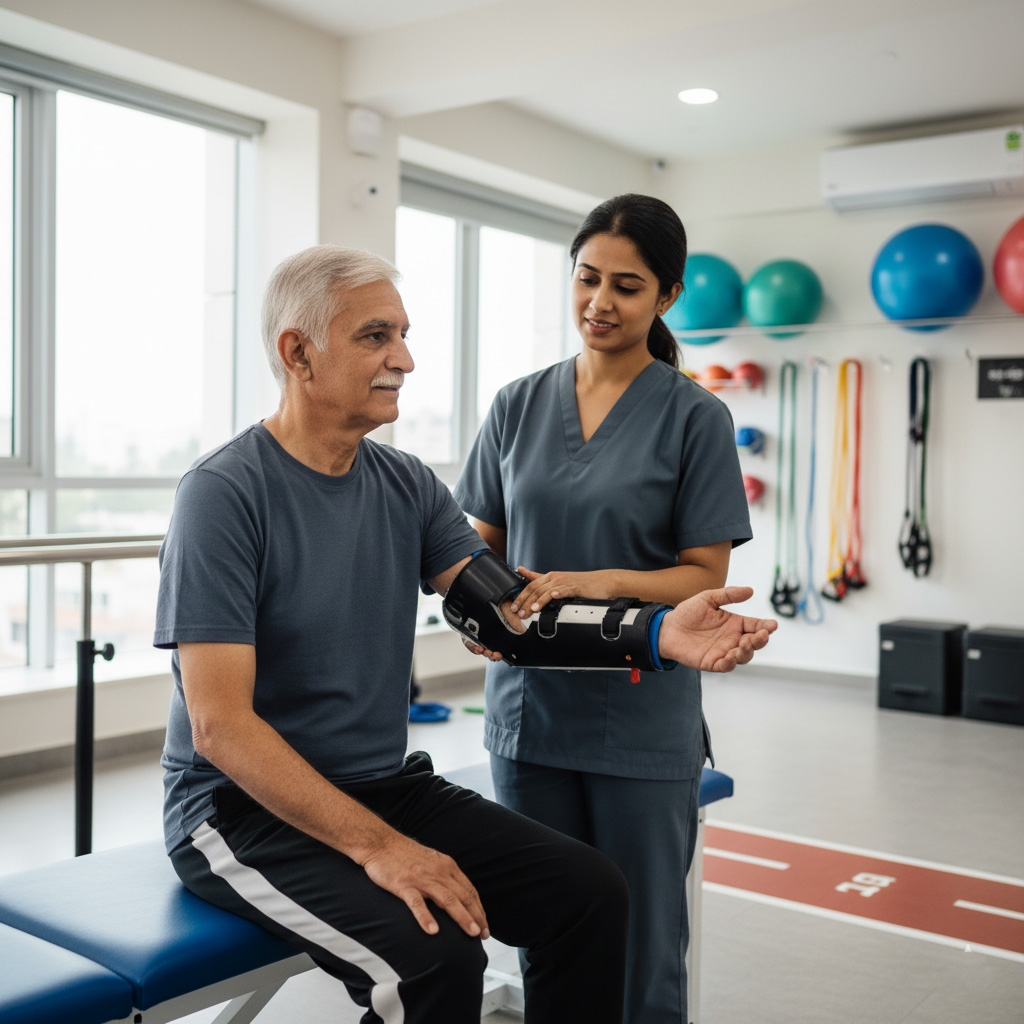
1. Physical Therapy (Physiotherapy) This focuses on restoring movement, balance, and coordination. After a stroke, a survivor may experience weakness on one side of the body. A physiotherapist works on:
- Strengthening muscles to improve motor skills.
- Improving walking (gait training) and balance to prevent falls.
- Practicing mobility skills like getting out of bed, standing up, and navigating stairs.
2. Occupational Therapy (OT) Occupational therapy is all about regaining independence in the “occupations” of daily life. An occupational therapist helps patients relearn practical, everyday activities, such as:
- Personal care: Dressing, bathing, grooming, and eating.
- Household tasks: Cooking, cleaning, and managing finances.
- Adaptive strategies: Recommending special equipment to make life safer.
3. Speech and Language Therapy Strokes can often impact communication and swallowing. A speech-language pathologist addresses:
- Aphasia: Difficulty understanding, speaking, reading, or writing.
- Dysphagia: Trouble swallowing, which can be dangerous. Therapy involves exercises to strengthen the muscles of the mouth and throat and improve language skills.
4. Cognitive and Emotional Support The impact of a stroke isn’t just physical. Many survivors face challenges with memory and attention. Furthermore, dealing with sudden changes can lead to frustration or depression. Psychological support is a vital part of recovery, helping patients and their families navigate the emotional journey.
#### The Role of Family and Caregivers Recovery from a stroke is a team effort, and family plays a crucial role. At our Ahmedabad clinic, we believe in involving caregivers in the rehabilitation process. We provide education on how to best support your loved one at home, assist with exercises, and manage the emotional challenges. An informed and supportive family environment is proven to significantly improve a patient’s motivation and long-term outcomes, making them an essential part of the stroke rehabilitation journey.
The Journey to Recovery: What to Expect
Rehabilitation should begin as soon as a person is medically stable, often within 24 to 48 hours after the stroke. The most intense recovery period is typically in the first few months, but meaningful improvement can continue for years with consistent effort.
The journey requires patience, persistence, and a dedicated team. A stroke is a life-changing event, but it doesn’t have to be the end of the story. With expert stroke rehabilitation, hard work, and support, survivors can achieve a fulfilling quality of life.
If you or a loved one needs guidance on the path to recovery, please don’t hesitate to contact our Ahmedabad clinic for a consultation.